
Kalamkari is more than a beautiful print on fabric. It is a centuries-old artistic tradition where storytelling, craftsmanship and colour come together to create textiles that carry the cultural identity of Andhra Pradesh.
From intricate floral patterns and graceful motifs to scenes inspired by mythology and nature, Kalamkari sarees continue to hold a special place in the world of Indian textiles. Every design reflects an artistic tradition that has evolved over generations while continuing to find relevance in modern wardrobes.
At Our Handlooms, we believe that understanding the story behind a saree makes wearing it even more special.
What Does Kalamkari Mean?
The word Kalamkari is commonly associated with kalam, meaning pen, and kari, referring to craftsmanship or artistic work.
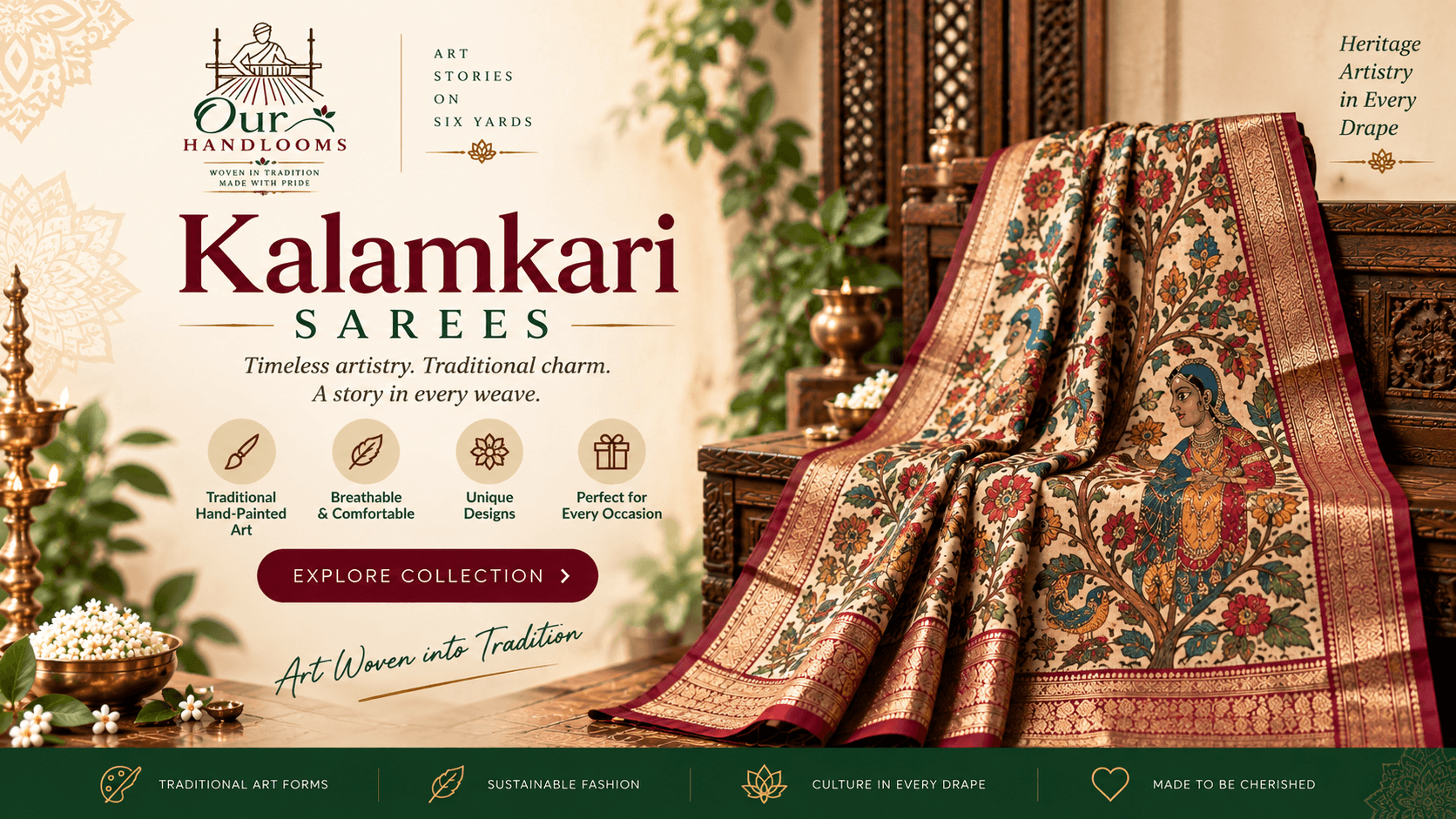
True to its name, Kalamkari is an art form centred on decorating fabric through detailed drawing, painting or printing. Traditionally, artisans worked with cotton fabrics and used natural colours derived from plant-based and mineral sources.
Over time, Kalamkari developed into two distinctive traditions, both deeply associated with Andhra Pradesh:
-
Srikalahasti Kalamkari
-
Machilipatnam Kalamkari, also closely associated with the Pedana tradition
While both share the rich heritage of Kalamkari, their artistic processes and visual styles are distinctly different.
Srikalahasti Kalamkari: The Art of the Freehand Pen
Srikalahasti Kalamkari is known for its distinctive freehand drawing and hand-painting technique.
Artists use a specially prepared pen-like tool to draw detailed motifs directly onto the fabric. The art is traditionally associated with storytelling, particularly through themes inspired by:
-
Indian mythology
-
The Ramayana
-
The Mahabharata
-
Puranic stories
-
Temple traditions
-
Nature and animal forms
This style allows the artist's individual hand and imagination to become an important part of the final creation. Each work can carry subtle variations that reflect the human craftsmanship behind it.
Srikalahasti Kalamkari is a registered Geographical Indication (GI) tradition associated with Andhra Pradesh.
More Than Decoration — A Form of Storytelling
One of the most fascinating aspects of Srikalahasti Kalamkari is its connection with visual storytelling.
Historically, painted cloth served as a medium through which stories, beliefs and cultural narratives could be represented visually. Detailed compositions could bring together people, animals, flowers, architectural elements and mythological scenes on a single textile.
This storytelling character is one of the reasons Kalamkari continues to feel artistic even when adapted to contemporary fashion.
Machilipatnam and Pedana Kalamkari: The Beauty of Hand Block Printing
On the coastal side of Andhra Pradesh lies another celebrated Kalamkari tradition associated with Machilipatnam and Pedana in Krishna district.
Unlike the freehand-painted approach of Srikalahasti, Machilipatnam Kalamkari is particularly known for the use of carefully carved wooden blocks to create designs on fabric.
These blocks allow artisans to develop:
-
Repeating floral patterns
-
Decorative vines
-
Persian-inspired motifs
-
Geometric arrangements
-
Detailed borders
-
Layered all-over designs
The result is a distinctive visual rhythm that makes this style especially recognisable.
Pedana has developed a strong identity around this traditional craft and is recognised by the Government of Andhra Pradesh under its One District One Product initiative for Pedana Block Kalamkari fabrics.
Two Styles, One Rich Heritage
Although both are called Kalamkari, the two traditions have their own character.
| Srikalahasti Kalamkari | Machilipatnam / Pedana Kalamkari |
|---|---|
| Primarily associated with freehand drawing and painting | Primarily associated with hand block printing |
| Strong storytelling and mythological themes | Strong floral, decorative and repeating patterns |
| Artist-led freehand compositions | Designs created through carved wooden blocks |
| Often connected with temple and narrative traditions | Strong association with decorative textile patterns |
| Highly expressive and artistic | Highly detailed and patterned |
Both traditions are valuable expressions of Andhra Pradesh's textile and artistic heritage.
The Colours of Kalamkari
Traditional Kalamkari is admired not only for its motifs but also for its rich and earthy visual character.
Historically, natural colouring materials have played an important role in the craft. Depending on the technique and artisan practice, colours may be developed using plant-based and other traditional dyeing processes.
The characteristic Kalamkari palette often includes shades inspired by:
-
Earthy reds
-
Deep blues
-
Black
-
Yellow and ochre tones
-
Browns
-
Cream and off-white backgrounds
The interaction between the colours and detailed artwork gives Kalamkari its distinctive identity.
Traditional Kalamkari production has involved multiple stages of fabric preparation, colour application, washing and dye fixing, making it a craft that requires considerable patience and skill.
Why Kalamkari Sarees Continue to Be Loved
Kalamkari has survived changing fashion trends because it has the ability to feel both traditional and contemporary.
A Kalamkari saree can be styled for:
Everyday Elegance
Subtle designs and lighter patterns can create an elegant ethnic look for regular wear.
Festivals
The colours, motifs and artistic richness of Kalamkari make it well suited to cultural and festive occasions.
Family Celebrations
Kalamkari can offer a graceful alternative for functions where traditional elegance is preferred without necessarily choosing heavily embellished attire.
Cultural Events
The artistic heritage of Kalamkari makes it particularly meaningful for occasions celebrating Indian art, culture and tradition.
How to Choose a Kalamkari Saree
When selecting a Kalamkari saree, it is useful to look beyond just the overall colour.
Consider:
1. The Style of Artwork
Do you prefer:
-
Large artistic motifs?
-
Mythological storytelling?
-
Floral patterns?
-
Repeating block-print designs?
-
Subtle contemporary motifs?
Choose a style that reflects where and how you intend to wear the saree.
2. The Colour Palette
Earthy tones often create a classic Kalamkari appearance, while brighter colour combinations can offer a more festive look.
3. The Fabric
Kalamkari designs can be found across different fabrics and fabric blends. The comfort, drape and occasion suitability may vary depending on the base material.
Always check the actual product description for accurate fabric information.
4. The Occasion
A saree chosen for everyday elegance may be very different from one selected for a wedding, festival or special celebration.
A Craft That Connects Art and Fashion
What makes Kalamkari special is that it sits beautifully between two worlds.
It is:
Art that can be worn.
A Kalamkari saree allows the wearer to carry elements of traditional design, regional heritage and artistic expression in an everyday form.
In an era of rapidly changing fashion trends, such crafts remind us of the value of patience, skill and human creativity.
Kalamkari and Andhra Pradesh: A Heritage to Celebrate
Andhra Pradesh holds a special place in the story of Kalamkari.
From the freehand artistic traditions of Srikalahasti to the block-printing heritage of Machilipatnam and Pedana, the state represents two important expressions of this celebrated textile art. Both Srikalahasti Kalamkari and Machilipatnam Kalamkari are registered Geographical Indications associated with Andhra Pradesh.
These traditions are not simply products of the past.
They continue to evolve through artisans, designers, weavers, printers and businesses that value the preservation and appreciation of Indian craftsmanship.
The Story Continues with Every Drape
A Kalamkari saree is not simply chosen for its colour or design.
Behind its patterns lies a larger story:
A story of artists.
A story of craftsmanship.
A story of Andhra Pradesh.
A story that has travelled across generations and continues to find a place in modern India.
At Our Handlooms, we celebrate the beauty of traditions that continue to live through the hands of skilled artisans and the people who choose to wear their stories.
Discover the Art of Tradition
Explore our Kalamkari Saree Collection and experience the timeless beauty of art, heritage and craftsmanship.
Woven in Tradition. Made with Pride.
— Our Handlooms